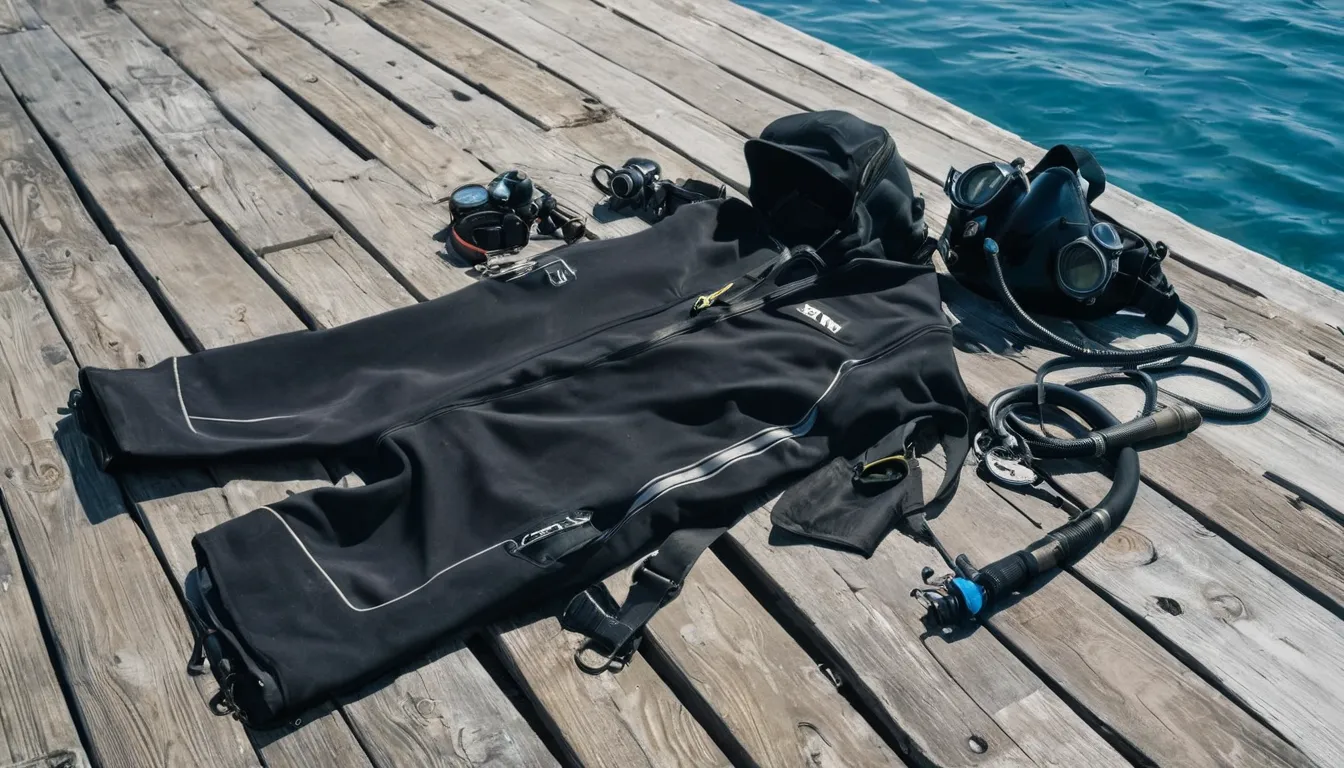
The kit, piece by piece
| Item | What it does | Beginners often |
|---|---|---|
| Mask | Puts an air space in front of your eyes so you can see clearly, and covers your nose so you can equalize it. | Often bought first, because fit is personal |
| Snorkel | Lets you breathe at the surface with your face in the water while you swim or wait. | Often bought with the mask |
| Fins | Turn leg movement into thrust. Full-foot fins are worn barefoot; open-heel fins are worn with boots. | Often bought early; boots too if needed |
| Exposure suit | A wetsuit or drysuit that slows heat loss and protects skin. Water draws heat away far faster than air. | Often rented at first |
| BCD | The buoyancy control device: a jacket or wing you add air to or vent from, which also holds the cylinder. | Usually rented at first |
| Regulator set | Reduces cylinder pressure to a breathable level. Includes a primary mouthpiece and a spare for a buddy. | Usually rented at first |
| Pressure gauge | Shows how much gas is left in the cylinder, so you can turn the dive and surface with a reserve. | Comes with the regulator set |
| Dive computer | Tracks depth and time and estimates how long you can stay before a direct ascent is no longer advised. | Some divers buy one soon after training |
| Weights | Offset the buoyancy of your body and suit so you can descend and stay level. | Provided by most dive centers |
| Cylinder | Holds compressed breathing gas. It needs regular inspection and testing, and only trained staff fill it. | Rented or supplied per dive |
Many dive centers include rental gear in a course or offer it separately. What beginners own versus rent varies by school and by personal choice. Ask your school what is included before you buy anything.
How the regulator works
A cylinder holds gas at very high pressure. The first stage, which screws onto the cylinder valve, lowers that pressure to an intermediate level. Hoses carry the gas to the second stage in your mouth, which delivers it at the same pressure as the water around you whenever you breathe in. A spare second stage, often brightly colored, lets your buddy breathe from your supply in an emergency. Another hose feeds the pressure gauge, and another lets you add air to your BCD.
Getting a mask that fits
A leaking or fogging mask can ruin a dive, which is why many divers buy their own first. A common test is to hold the mask to your face without the strap, breathe in gently through your nose and let go. If it stays in place, the seal is promising. Try several, ideally with the help of someone at a dive store, and ask how to prepare a new mask so it doesn't fog.
Fins and boots
Full-foot fins slip on like a shoe and suit warm water. Open-heel fins have an adjustable strap and are worn with neoprene boots, which help in cooler water and on rocky entries. Comfort matters more than anything else. A fin that pinches or rubs will make you tired and distracted.
Staying warm
Water draws heat away from your body far faster than air at the same temperature, so even warm water can chill you over a long dive. Wetsuits come in different thicknesses, and thicker suits suit colder water. Drysuits keep you dry inside and are used in cold water, but they need their own training. A cold diver uses more air and thinks less clearly, so dress for the water you will dive in.
Dive computers
A dive computer tracks your depth and time and estimates how long you can stay before a direct ascent to the surface is no longer advised. Most also warn you if you ascend too fast. Different models use different calculation methods, so read the manual of the one you use and learn it on easy dives. A computer is a tool. It doesn't replace a plan or good judgment.
Looking after gear
- Rinse everything in fresh water after each dive, especially after salt water.
- Dry gear in the shade. Sun and heat age rubber, silicone and neoprene.
- Keep the regulator's dust cap on and dry when it is off the cylinder.
- Have regulators, BCDs and cylinders serviced and inspected on the schedule the manufacturer or local rules set, by a qualified technician.
- Don't dive with gear that leaks, free-flows or behaves oddly. Tell the dive center.
Gear FAQ
Should I buy all my gear before the course?
Most beginners don't. Many buy a mask, snorkel and fins, then rent the rest until they know what kind of diving they enjoy. Ask your school what they provide.
Can I service my own regulator?
Regulator servicing needs training, parts and tools. Leave it to a qualified technician, and only do the basic rinsing and checks your course teaches.